
What Does Hail Damage Actually Look Like On A Roof?
After a strong summer storm, many homeowners walk outside, look up at the roof, and see nothing unusual. No missing shingles. No obvious holes. No water coming through the ceiling.
So the roof must be fine, right? Not always.
Hail damage often looks subtle from the ground. The marks hail leaves on asphalt shingles might measure only an inch or two across. Some damage blends into the normal color and texture of the roof. Other damage affects the shingle surface without creating an immediate leak.
For homeowners in La Crosse, Onalaska, Holmen, Winona, and surrounding communities, late summer and early fall offer a good opportunity to think back on severe storms from the past few months.
If your home experienced hail, strong winds, or repeated summer storms, a roof inspection helps answer a simple question. Did the weather leave damage behind?
At Ledegar Roofing, we look at the entire roofing system. Hail damage is only one part of the inspection. Shingle condition, flashing, vents, gutters, roof penetrations, and signs of moisture all help tell the full story.
What Does Hail Damage Look Like On Asphalt Shingles?
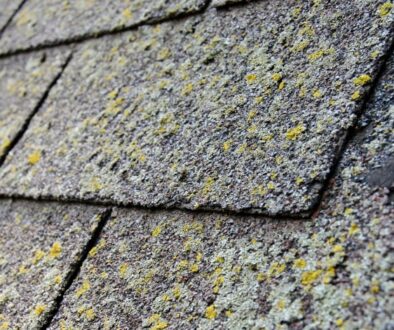
Hail damage on asphalt shingles often appears as small areas where the surface looks different from the surrounding material.
Common signs include:
- Circular or irregular dark spots
- Missing shingle granules
- Exposed asphalt beneath the granule surface
- Bruised or softened areas
- Cracks in the shingle surface
- Small impact marks spread across a roof slope
- Damage concentrated on the side of the roof facing the storm
Some hail strikes knock granules loose without creating an obvious crack. Other impacts damage the asphalt layer beneath the surface.
The size and appearance vary. Hailstone size, wind speed, direction, roof age, roofing material, and existing roof condition all influence what a storm leaves behind.
A newer roof and an older roof might react differently to the same storm.
What Does A Hail Bruise On A Shingle Look Like?
Roofers often use the word “bruise” when discussing hail damage.
A bruise refers to an impact area where hail has damaged the shingle even though the surface has not split apart.
From above, the area might look darker than the rest of the shingle. Granules might be missing around the impact point. In some cases, the asphalt underneath feels softer than the surrounding material.
Homeowners should not walk across the roof pressing on suspected damage.
Roof surfaces create fall risks, especially after storms. Foot traffic also places additional stress on worn or damaged shingles.
A roofing contractor has the training and equipment to inspect suspected impact areas safely.
Does Hail Damage Always Look Like A Hole?
No. A direct hole through the roofing material would represent obvious damage, but most hail damage looks less dramatic.
Hail often damages the protective surface of an asphalt shingle first.
Think about the layers involved. Granules protect the asphalt beneath them. The asphalt helps protect the reinforcement layer inside the shingle. A hail strike sometimes removes granules and weakens the material underneath without creating an opening all the way through the roof.
This explains why a home might have hail damage without an immediate ceiling leak.
The damage still deserves attention because weakened roofing material faces more exposure to sunlight, rain, snow, ice, and temperature changes over time.
Why Is Hail Damage Hard To See From The Ground?
Distance hides detail. From your yard or driveway, you might notice a missing shingle or a large branch resting on the roof. Small impact marks are much harder to spot.
Roof pitch creates another challenge. Many shingle surfaces do not face directly toward your line of sight.
Color also matters. A dark impact mark on dark shingles might blend in. Light granule loss might look like ordinary color variation. Roof stains, normal aging, manufacturing patterns, and shadows also make visual evaluation difficult.
Even binoculars have limits. A ground-level check remains useful for spotting obvious problems, but a clean-looking roof from 20 or 30 feet away does not prove the roofing surface escaped damage.
What Other Parts Of Your Home Show Signs Of Hail?
Roofers often look beyond the shingles when evaluating a property after a storm.
Metal surfaces sometimes provide useful clues because hail leaves dents more clearly on those materials.
Look for signs around:
- Gutters
- Downspouts
- Metal roof vents
- Flashing
- Fascia
- Siding
- Window screens
- Outdoor equipment
- Vehicles parked outside
Dents on gutters or downspouts do not automatically prove the shingles suffered functional damage.
They do show the property experienced enough hail impact to leave marks on exterior surfaces.
That information helps provide context during a roof inspection.
Do Granules In Your Gutters Mean You Have Hail Damage?
Not necessarily.
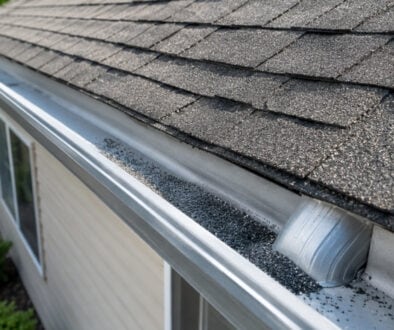
Asphalt shingles naturally lose some granules throughout their service life. New shingles also shed loose excess granules after installation. Roof age and timing matter.
If your gutters normally contain a small amount of granule material and you suddenly notice much more after a hailstorm, the change deserves attention.
Hail knocks granules loose from the shingle surface. Later rain washes those particles into gutters and downspouts.
Look at patterns. A sudden increase after severe weather means more than a small amount of granules found during routine gutter cleaning.
An inspection helps determine whether storm impacts caused the loss or normal aging explains what you see.
Does Hail Damage Cause Roof Leaks Right Away?
Sometimes, but often no immediate leak appears.
Severe impacts might damage shingles, flashing, vents, or other roofing components enough to allow water entry during the same storm.
More subtle damage might develop into a problem later. A damaged shingle surface faces greater exposure after protective granules disappear. Cracks and weakened areas also face repeated rain, sunlight, snow, ice, and freeze-thaw cycles.
Wisconsin winters add another layer of stress. A roof already weakened by summer hail enters winter facing snow accumulation, ice, cold temperatures, wind, and repeated freezing and thawing.
This is one reason fall inspections make sense after a stormy summer.
You have an opportunity to find concerns before snow covers the roofing surface.
What Does Wind Damage Look Like After A Hailstorm?
Hail rarely arrives alone. Severe thunderstorms often bring strong wind. Wind creates a different set of roofing problems.
Common signs include:
- Missing shingles
- Lifted shingle edges
- Creased shingles
- Loose roofing materials
- Damaged ridge shingles
- Torn or displaced flashing
- Debris impacts
Wind damage sometimes looks more obvious than hail damage.
A missing shingle stands out from the ground. A small hail bruise does not.
A storm inspection should look for both types of damage rather than focusing only on hail.
Does Every Hailstorm Damage Your Roof?
No. Hail size matters, but size is not the only factor.
Wind speed and direction affect impact force. Roof slope affects how hail hits the surface. Roofing material, age, condition, and installation also influence the result.
Small hail during one storm might leave no meaningful damage. A stronger storm with larger hail and heavy wind presents a different situation. Existing roof wear matters too.
An older asphalt roof with brittle shingles might respond differently from a newer roofing system.
Avoid assuming damage based only on hearing hail hit the house.
At the same time, avoid assuming no damage because the roof looks normal afterward. Inspection gives you better information than either assumption.
How Soon Should You Check Your Roof After A Hailstorm?
Start with a ground-level check once the storm has passed and conditions are safe.
Walk around the property and look for obvious changes. Check gutters, downspouts, siding, screens, vents visible from the ground, and debris around the home.
Look up at the roof without climbing onto the surface.
Watch for missing shingles, displaced materials, branches, or obvious damaged areas.
If the storm produced significant hail or strong winds, consider scheduling a professional inspection even when no major problem stands out from the yard.
Earlier inspection gives the roofer a clearer view of the roofing surface and helps separate fresh storm impacts from older wear.
Should You Inspect Your Roof After Summer Storm Season?
For many homeowners, yes.
One minor storm does not require an inspection every time.
Repeated strong storms, visible exterior damage, large hail, high winds, or an older roof create stronger reasons for an evaluation.
Late summer and early fall also offer practical timing.
The roofing surface remains visible. Contractors still have more workable weather than later in the year. Homeowners have time to address known problems before snow and ice arrive.
An inspection before winter provides a clearer picture of roof condition going into the colder months.
What Does A Roofer Look For During A Hail Damage Inspection?
A professional inspection covers more than individual impact marks. The roofer looks at the pattern, location, and extent of suspected damage.
The inspection also considers:
- Shingle condition
- Granule loss
- Cracks or bruises
- Roof age
- Flashing
- Roof vents
- Valleys
- Ridge areas
- Gutters and downspouts
- Signs of previous repairs
- Existing wear
- Interior signs of moisture where relevant
Pattern matters with hail.
Random marks spread across a storm-facing roof slope tell a different story from one isolated scuff caused by foot traffic or debris. Experience helps separate storm damage from normal aging and other types of wear.
Does Hail Damage Mean You Need A New Roof?
No. Some hail damage affects a limited area. Other storms create widespread damage across several roof slopes.
The overall roof condition should guide the recommendation.
A newer roof with isolated damage presents a different decision from an older roof with widespread granule loss, previous leaks, and significant storm impacts.
A roofer should evaluate the entire system before discussing repair or replacement.
At Ledegar Roofing, we believe homeowners deserve an explanation of what we find and why a particular option makes sense.
The presence of hail marks alone does not answer every roofing question. Extent, severity, age, material condition, and underlying damage all matter.
What If Your Roof Looks Fine After A Hailstorm?
A roof looking fine from the ground is a good sign, but not a complete inspection.
Watch your home during the weeks following the storm.
Pay attention to:
- New ceiling stains
- Water marks in the attic
- Granule buildup in gutters
- Missing shingles
- Pieces of roofing material on the ground
- New exterior dents
- Changes in roof appearance
If none of these signs appear and the storm was minor, continued monitoring might be enough.
If your area received significant hail or strong wind, a professional inspection offers a closer look.
The goal is not to assume every storm created major damage. The goal is to identify real problems while they remain easier to address.
Why Fall Is A Good Time To Check For Summer Hail Damage
September gives homeowners a natural checkpoint.
Summer thunderstorms have passed through the region. Leaves have not fully covered every roof and gutter. Snow has not hidden the shingles. Cold-weather roofing conditions have not fully arrived.
This makes early fall a useful time to evaluate how the roof handled the season.
Known roof problems deserve attention before winter. A damaged area left through several months of snow, ice, wind, and freeze-thaw cycles faces more exposure.
Even when no repair is needed, an inspection provides useful information about the roof’s overall condition. You enter winter knowing what is above your head instead of wondering what summer storms left behind.
When Should You Call A Roofer After Hail?
Call a roofing professional when the storm produced significant hail, strong winds, visible exterior damage, missing shingles, sudden granule loss, or signs of water entry.
An older roof also deserves closer attention after severe weather.
You do not need to diagnose the damage yourself.
Take photos from the ground if you see visible problems. Avoid climbing onto the roof. Then schedule an inspection.
Ledegar Roofing serves homeowners throughout La Crosse, Onalaska, Holmen, Winona, and surrounding communities. Our team evaluates the complete roofing system and explains what we find.
If summer storms brought hail through your neighborhood, fall is a good time to find out how your roof handled them before winter weather arrives.
Frequently Asked Questions About Roof Hail Damage
What Is The Most Common Sign Of Hail Damage On A Roof?
Common signs include missing granules, dark impact spots, bruised areas, and cracks on asphalt shingles. Roof vents, gutters, and flashing might also show dents after hail.
Does Hail Damage Look Like Black Spots On Shingles?
Sometimes. Hail impacts often remove granules and expose darker asphalt beneath the surface. Dark spots have other causes too, so a professional inspection helps identify the source.
How Big Does Hail Need To Be To Damage A Roof?
No single hail size guarantees damage. Hailstone size, wind speed, direction, roof age, roofing material, and existing condition all affect the result.
Will A Hail-Damaged Roof Leak Immediately?
Not always. Severe damage might lead to immediate water entry. Other impacts weaken the shingle surface without creating an immediate leak. Problems sometimes become more noticeable after continued weather exposure.
Should I Climb On My Roof To Look For Hail Damage?
No. Roof surfaces create a serious fall risk, especially after storms. Walking across damaged or aging shingles also places extra stress on roofing materials. Check from the ground and contact a roofing professional when a closer inspection makes sense.
Should I Get My Roof Inspected Even If I Do Not See Hail Damage?
An inspection makes sense after significant hail, high winds, visible property damage, or repeated severe storms. Hail damage often remains difficult to see from the ground, so a clean-looking roof does not always tell the full story.