How Much Standing Water Is Too Much On A Flat Roof?
After a heavy rain, seeing some water on a flat or low-slope commercial roof does not always mean something is wrong. These roofing systems are designed with subtle slopes that direct water toward drains, scuppers, gutters, and downspouts, but drainage does not always happen immediately.
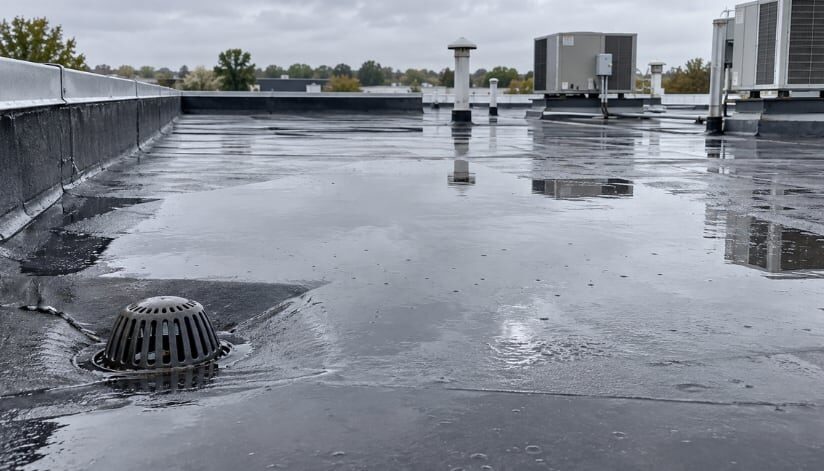
The concern starts when water remains in the same areas long after the rest of the roof has dried. As a general industry benchmark, water remaining for more than 48 hours after rainfall is often considered ponding water. Repeated ponding deserves attention because it often points to blocked drainage, low spots, compressed insulation, roof deck movement, or a drainage layout that no longer performs as intended.
For commercial property owners in western Wisconsin, these issues become especially important in fall. Water that sits harmlessly during a warm October afternoon becomes a different concern once overnight temperatures drop below freezing. Finding drainage problems before winter gives you more time to address them before snow and ice complicate access and add more stress to the roofing system.
Why Does Water Collect on a Flat Roof?
Despite the name, most flat roofs are not completely flat. Commercial roofing systems typically include enough slope to move water toward designated drainage points. The slope might be difficult to notice from the ground, but even small elevation changes influence how water moves across the roof.
Ponding develops when something interrupts this drainage path. Sometimes the cause is simple, such as leaves covering a roof drain. In other cases, the problem comes from changes within the roofing system itself.
Common causes of standing water include:
- Leaves or debris blocking roof drains
- Clogged or restricted scuppers
- Low areas in the roof surface
- Settled or compressed insulation
- Roof deck deflection
- Poor drainage design
- Drains positioned above surrounding roof areas
- Previous repairs affecting water flow
- Rooftop equipment changing drainage patterns
- Ice blocking drains during winter
The most important clue is often repetition. If water keeps collecting in the same place after ordinary rainfall, the roof deserves a closer look.
How Long Should Water Stay on a Flat Roof?
A shallow wet area several hours after rainfall differs from a puddle that remains two days later. Roof drainage needs time, especially after a strong storm, but water should continue moving toward drains and scuppers as conditions dry.
The 48-hour mark provides a useful reference point. When substantial standing water remains beyond that period, a professional roof inspection helps determine why the area is not draining properly.
Time is only part of the picture. The depth and size of the ponding area also matter, along with how often the problem returns. A large pool of water appearing after every moderate rain deserves more attention than a small damp spot following an unusually heavy storm.
Property owners should also look for changes around the affected area, including membrane discoloration, worn seams, sagging, damaged flashing, or previous repairs showing signs of deterioration.
Blocked Roof Drains Often Cause Ponding
Roof drains handle a large amount of water during heavy rain, which makes them one of the first places to inspect when standing water appears. Leaves, sticks, dirt, roofing debris, seed pods, and other material often collect near drain openings. Fall creates ideal conditions for this problem because leaves move across large roof surfaces during wind and rain, then settle around the lowest drainage points.
A partially blocked drain might still move enough water during light rain. During a stronger storm, the restriction becomes much more obvious as water backs up across the roof.
Signs of a Blocked Roof Drain
Watch for water consistently surrounding one drain, debris packed around the opening, or drainage that continues long after rainfall ends. Another clue appears when one part of the roof drains normally while an area near a specific drain remains covered with water.
If removing visible debris does not restore normal drainage, the restriction might sit deeper inside the drain or connected piping. At that point, professional evaluation makes more sense than repeatedly clearing the surface.
Blocked Scuppers Create Similar Problems
Scuppers are openings located along roof edges or parapet walls that allow water to leave the roof. They often direct runoff into downspouts or exterior drainage systems. Because scuppers sit along the path of moving water, leaves and debris naturally collect around them. A partially blocked scupper might continue functioning during light rain while struggling during heavier precipitation.
Fall debris increases this risk. Once temperatures drop, wet leaves and standing water around a scupper also create conditions for ice buildup. A drainage point that works poorly in October might become far less effective after repeated freezing and thawing. Keeping scuppers clear before winter helps preserve the drainage path the roof was designed to use.
Low Spots Lead to Recurring Ponding
If drains and scuppers remain clear but water repeatedly collects in the same location, the roof might have a low spot. Low areas develop for several reasons. Insulation beneath the membrane sometimes settles or compresses over time. The roof deck might deflect slightly under long-term loads. Previous repairs might also change the roof surface enough to alter drainage patterns.
The result is usually easy to recognize after rain. Most of the roof dries normally while one section continues holding water. A professional inspection looks at the size and depth of the low area, along with the condition of the membrane beneath it. Depending on the cause, the solution might involve a localized repair, drainage improvements, tapered insulation, or more extensive work within the roof assembly.
Why Repeated Ponding Matters to the Roof Membrane
Commercial roofing membranes are designed to withstand weather exposure, but ongoing ponding creates conditions worth monitoring. Standing water keeps one section of the roofing system wet much longer than surrounding areas. Over time, the greatest concern often involves existing weak points rather than the water alone.
Roofers pay close attention to:
- Membrane seams
- Flashing
- Previous patches
- Roof penetrations
- Drain connections
- HVAC curbs
- Fasteners
- Areas showing cracking or wear
Roof age also matters. A newer membrane in good condition presents a different situation from an older roof with worn seams, repeated repairs, and a history of leaks. Standing water sometimes acts as a clue. The pond itself might not be the only problem, but it shows where moisture repeatedly concentrates.
Does Standing Water Mean Your Flat Roof Is Leaking?
Not necessarily. A commercial roof might hold water without showing any interior leak. Still, the absence of dripping inside the building does not mean repeated ponding should be ignored. Water that sits near aging seams, flashing, penetrations, or repaired areas increases the importance of monitoring those locations closely.
Commercial roof leaks are also difficult to trace. Water entering through one area sometimes travels through insulation, decking, or other parts of the assembly before appearing inside the building.
Interior warning signs include:
- Ceiling stains
- Damp insulation
- Water marks near exterior walls
- Dripping after rain
- Musty odors
- Discoloration near penetrations
Matching interior symptoms with roof conditions often requires a full inspection rather than focusing only on the area directly above the stain.
Why Repeated Ponding Matters More Than One Storm
One unusually strong rainstorm might temporarily overwhelm an otherwise functional drainage system. A pattern of standing water after ordinary rain tells a different story. Property managers benefit from watching the same areas after several storms. Taking photos from the same locations helps track whether ponding areas are growing, draining more slowly, or appearing more frequently.
Repeated water in one location often points toward a structural or drainage issue that routine cleaning alone will not solve. A commercial roofer should evaluate the slope, insulation, decking, drainage placement, and membrane condition before recommending the next step.
Why Standing Water Becomes More Important Before Winter
Fall is an ideal time to address ponding because Wisconsin winter adds several complications. Water around drains, scuppers, seams, and low areas eventually freezes. During warmer periods, ice and snow begin to melt. Temperatures then fall again, causing moisture to refreeze.
This repeated freeze-thaw cycle adds stress around roofing components already dealing with standing water. Frozen water also affects drainage. A scupper partially restricted by debris becomes more vulnerable once ice forms around the opening. The same is true for roof drains surrounded by leaves or standing water.
Snow adds weight as well, which makes existing low areas and drainage concerns more important heading into winter. Finding these conditions in October gives property owners more time to deal with them before snow hides the roof surface.
What Should You Check Before Freezing Temperatures Arrive?
A fall commercial roof inspection should place drainage near the top of the list. Leaves and debris collect quickly during this time of year, and several small problems often become obvious after the first few heavy rains.
Look for:
- Leaves collecting around drains
- Blocked or restricted scuppers
- Debris along parapet walls
- Standing water after rainfall
- Recurring low spots
- Loose or damaged flashing
- Membrane cracks or punctures
- Worn seams
- Deteriorating previous repairs
- Poor drainage from downspouts
Areas around rooftop HVAC units and other penetrations also deserve attention because water often collects around changes in roof elevation.
Does Ponding Water Mean You Need a New Roof?
No. Many standing water problems have solutions that do not involve full roof replacement. A clogged drain might need cleaning. A damaged scupper might need repair. A localized low area might require corrective work. Other roofs benefit from tapered insulation or changes to the drainage layout.
Replacement becomes a stronger consideration when ponding appears alongside broader roofing problems, including widespread membrane deterioration, wet insulation, repeated leaks, extensive low areas, or a roof already nearing the end of its expected service life.
A commercial roofer should consider:
- Roof age
- Membrane condition
- Size and frequency of ponding
- Leak history
- Insulation condition
- Roof deck condition
- Flashing and seam condition
- Previous repair history
- Drainage design
A puddle tells you where water sits. A thorough inspection explains why the water stays there and what needs attention.
When Should You Call a Commercial Roofer About Standing Water?
Schedule an inspection when water remains for roughly 48 hours after rainfall, repeatedly returns to the same locations, or appears alongside membrane deterioration or interior moisture.
You should also have the roof evaluated when drains and scuppers look clear but ponding continues. Persistent standing water often points toward a low area, slope problem, compressed insulation, or another condition that requires more than routine maintenance.
At Ledegar Roofing, we work with commercial roofing systems throughout La Crosse, Onalaska, Holmen, and surrounding communities. A fall inspection helps identify drainage problems, membrane concerns, flashing issues, and other conditions before winter adds snow, ice, and repeated freeze-thaw cycles. Standing water does not always mean a major roofing problem. Repeated standing water does mean the roof deserves attention.
Frequently Asked Questions About Standing Water on Flat Roofs
Is Standing Water Normal on a Flat Roof?
Some temporary water after rain is common on low-slope roofing systems. Water that remains in the same areas for roughly 48 hours deserves professional evaluation, especially when the problem happens repeatedly.
Why Does My Flat Roof Keep Holding Water in the Same Spot?
Recurring ponding often points toward a low area, compressed insulation, deck movement, poor drainage, or insufficient slope toward a drain or scupper.
Will a Clogged Roof Drain Cause Standing Water?
Yes. Leaves, debris, dirt, and ice restrict drainage and allow water to collect around nearby sections of the roof.
Does Ponding Water Damage a Commercial Roof?
Repeated ponding increases the importance of checking seams, flashing, repairs, and other vulnerable areas. The condition of the membrane, age of the roof, and drainage design all influence how serious the issue becomes.
Should a Flat Roof Be Inspected Before Winter?
Yes. Fall provides a good opportunity to identify blocked drainage, membrane damage, and recurring ponding before freezing temperatures, snow, and ice make those problems harder to address.