What Causes Fireplace Odors When You’re Not Using It?
A fireplace should not leave your home smelling smoky when no fire is burning. Yet many homeowners notice stale smoke, soot, creosote, or musty odors coming from the fireplace during fall and winter, especially during damp weather or sudden temperature changes. The source often involves airflow rather than a recent fire. A chimney relies on upward draft to move smoke and combustion gases out of the home. When airflow reverses, outside air travels down the chimney and carries odors from soot, creosote, moisture, and other residue into the living space.
Creosote buildup, downdrafts, negative indoor air pressure, damp conditions, damper problems, and chimney obstructions all contribute to fireplace odor. More than one issue often exists at the same time, which is why a professional inspection provides more useful answers than masking the smell with an air freshener.
At Ledegar Roofing, we look at the chimney as part of a larger system. The flue, damper, cap, crown, masonry, flashing, and surrounding roof all affect airflow, moisture control, and overall chimney performance.
Why Does a Fireplace Smell Smoky When No Fire Is Burning?
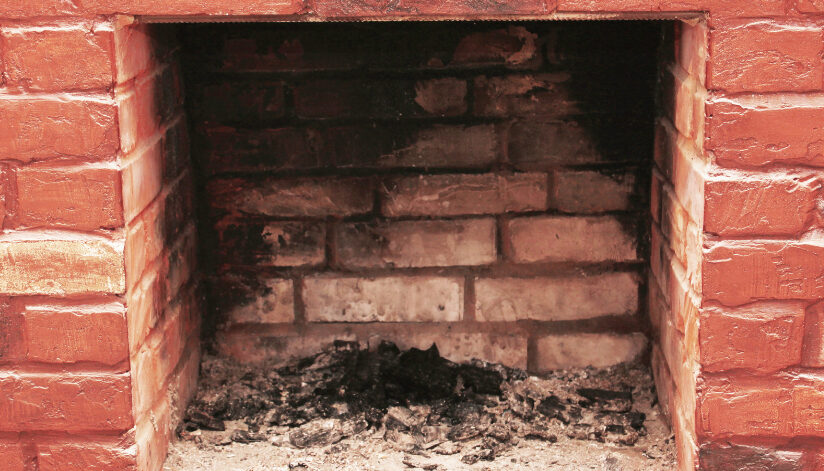
Most smoky fireplace odors come from residue left inside the chimney. Wood fires produce soot and creosote, and both collect along the flue, smoke chamber, damper, and other interior surfaces over time. Those deposits stay behind long after the fire goes out.
When air moves down the chimney instead of up, odor from those deposits enters the room. Homeowners often describe the smell as burned wood, campfire smoke, soot, tar, or a damp smoky odor. The intensity often changes with weather conditions, indoor air pressure, and the amount of buildup inside the chimney.
A fireplace might smell fine during a cold, dry week and become far more noticeable during warmer, humid weather. Those changes often point toward draft and moisture conditions rather than a new problem forming overnight.
Downdrafts Often Bring Chimney Odors Into the House
A properly functioning chimney relies on rising air. Warm air and combustion gases move upward through the flue while a fire burns, creating the draft needed to carry smoke outside.
A downdraft reverses this movement. Outdoor air travels down the chimney and enters the home through the fireplace opening, picking up soot and creosote odors along the way.
Weather has a major influence on draft. Wind direction, outdoor temperature, roof shape, nearby trees, surrounding buildings, and chimney height all affect airflow around the chimney. A cold chimney also produces weaker upward draft than a warm chimney, especially during mild fall weather when indoor and outdoor temperatures remain relatively close.
If fireplace odor becomes stronger during certain weather patterns, downdraft deserves consideration. A professional inspection helps determine whether airflow conditions alone explain the smell or whether buildup, blockage, or damper problems are adding to the issue.
Negative Air Pressure Inside the House Might Be Pulling Air Down the Chimney
Homes constantly move air in and out through exhaust equipment, heating systems, ventilation, doors, and small gaps around the building envelope. Trouble starts when more air leaves the house than enters, creating negative indoor pressure.
When indoor pressure drops, the house pulls replacement air from available openings. A chimney often becomes one of those paths, especially when the damper does not seal tightly.
Several household systems contribute to negative pressure:
- Kitchen exhaust fans
- Bathroom exhaust fans
- Clothes dryers
- Whole-house ventilation equipment
- Furnaces and other combustion appliances
- High-powered range hoods
Energy-efficiency improvements also affect indoor airflow. New windows, added insulation, and air sealing reduce uncontrolled outdoor air entering the home. Those upgrades improve comfort and energy performance, but they also change pressure relationships inside the house.
A fireplace that never produced odors years ago might start smelling after major remodeling or the installation of stronger exhaust equipment. Timing often provides an important clue.
How to Recognize a Negative Pressure Problem
Pay attention to when fireplace odor becomes strongest. If the smell increases while the dryer, kitchen range hood, or bathroom exhaust fan runs, indoor pressure deserves a closer look.
You might also notice a temporary improvement when a nearby window is cracked slightly. That change suggests the home is searching for replacement air, although a chimney professional should still evaluate the flue, damper, and buildup before blaming pressure alone.
Negative pressure and creosote often work together. The pressure problem pulls air downward, while the deposits inside the chimney supply the odor entering the room.
Why Damp Weather Makes Fireplace Odors Stronger
Many homeowners notice stronger fireplace smells during rain or humid weather because moisture intensifies odors from soot and creosote. Damp air traveling through the chimney picks up those smells and carries them into the house more easily.
Moisture also raises questions about the exterior chimney. Rain might enter through a damaged cap, cracked crown, deteriorated masonry, or failed flashing around the roof. When water reaches the chimney system, homeowners sometimes notice a musty smell mixed with smoke or soot.
Persistent odor after rainfall deserves attention for another reason. Wisconsin freeze-thaw cycles place additional stress on wet masonry. Water entering small cracks freezes as temperatures drop, expands, and contributes to further deterioration over time. A smoky or musty chimney odor during damp weather therefore points toward more than indoor comfort. The condition sometimes signals an airflow concern, a moisture issue, or both.
Creosote Buildup Makes Fireplace Smells Stronger
Creosote forms when smoke cools and leaves residue along the flue and other interior chimney surfaces. The amount varies depending on burning habits, wood moisture, chimney temperature, airflow, and how often the fireplace or wood-burning appliance is used. Some creosote appears dry and flaky, while heavier deposits become harder, shinier, and more difficult to remove. The more buildup inside the chimney, the more odor-producing material remains available whenever airflow reverses.
A dirty chimney often smells stronger during humid weather or downdraft conditions because moving air passes over a larger amount of soot and creosote. Professional cleaning removes buildup and gives the technician a clearer view of the flue and liner afterward. If your fireplace has seen regular use and smoky odors have grown stronger over time, chimney cleaning belongs near the top of the list of next steps.
Damper Problems Let More Chimney Air Enter the Room
The damper helps control airflow between the fireplace and chimney. When the fireplace is not in use, the damper reduces air movement through the flue, although many traditional dampers do not create a fully airtight seal.
Age, corrosion, soot, debris, and wear all affect damper performance. A warped or damaged damper might leave a larger opening than expected, while soot or creosote around the mechanism sometimes keeps the damper from closing properly. A professional chimney service should include evaluation of the damper and surrounding smoke chamber. If the damper does not move freely or fails to close as designed, excess chimney air enters the home and carries odors with it. Damper problems often become more noticeable during fall and winter because temperature differences and indoor pressure changes place more emphasis on chimney airflow.
Chimney Blockages Also Affect Draft
Creosote is not the only material capable of restricting a chimney. Bird nests, leaves, sticks, animal debris, damaged masonry, and other obstructions sometimes reduce the open area inside the flue. A damaged or missing chimney cap increases the chance of debris and animals entering from above. Even a partial obstruction changes airflow and weakens draft, which increases the likelihood of smoke or odors moving in the wrong direction.
Signs worth watching include:
- Smoke entering the room during a fire
- Weak or inconsistent draft
- Unusual sounds inside the chimney
- Debris falling into the firebox
- Persistent smoke or creosote odors
- Evidence of birds or animals
A professional cleaning should include an obstruction check rather than focusing only on brushing soot from the flue.
Does a Dirty Chimney Always Cause Fireplace Odors?
No. A freshly cleaned chimney still develops odor problems when airflow moves downward through the flue. Cleaning addresses buildup, but airflow problems require a different solution. A complete diagnosis looks at the whole chimney system. The technician should evaluate the flue, liner, damper, smoke chamber, cap, crown, masonry, flashing, and airflow conditions rather than assuming every odor complaint needs another cleaning.
For some homes, cleaning removes most of the smell because heavy creosote was the main source. In other homes, persistent odor points toward downdraft, moisture, negative indoor pressure, or poor damper performance. The best solution depends on both the odor source and the reason chimney air is entering the home.
What Should a Professional Chimney Inspection Include?
A useful chimney inspection looks beyond the visible firebox and evaluates the components responsible for draft, moisture protection, and safe operation. This broader approach matters because fireplace odor often comes from several contributing factors rather than one isolated issue.
A professional should evaluate:
- Soot and creosote buildup
- Flue and liner condition
- Damper operation
- Smoke chamber condition
- Blockages or debris
- Chimney cap condition
- Chimney crown condition
- Exterior masonry
- Flashing around the roof
- Signs of moisture entry
Cleaning often improves the inspection because removing soot and creosote exposes more of the flue and liner. Once those surfaces are visible, cracks, deterioration, and other concerns become easier to identify.
This level of evaluation becomes especially important when fireplace odor appears alongside poor draft, visible moisture, masonry deterioration, or smoke entering the room.
When Does Chimney Cleaning Make Sense?
Cleaning makes sense when soot or creosote has accumulated, when the chimney has not received service recently, or when odor has increased after a season of regular fireplace use. The service removes buildup while giving the technician a better view of interior chimney surfaces.
Fall provides a practical time for chimney cleaning because homeowners begin using fireplaces more often as temperatures drop. Scheduling before heavy winter use leaves time to address buildup, damper concerns, moisture problems, or repair needs before the coldest part of the season. If you do not know when the chimney was last inspected or cleaned, professional service provides a clearer picture before you rely on the fireplace throughout winter.
When Fireplace Odors Deserve Professional Attention
A faint smoky smell shortly after a fire does not always point toward a serious problem. Persistent odor days or weeks after fireplace use deserves more attention, especially when the smell worsens during rain, while exhaust fans run, or during temperature changes.
Schedule a chimney inspection when you notice several of the following conditions:
- Strong smoke or creosote odors
- Odors growing worse over time
- Smoke entering the room
- Poor or inconsistent draft
- Dampness around the fireplace
- Problems opening or closing the damper
- Debris in the firebox
- Visible masonry deterioration
- No recent chimney inspection or cleaning
A professional evaluation helps determine whether routine buildup, airflow, moisture, or a structural issue sits behind the odor. Addressing the actual cause produces a better result than covering the smell temporarily.
How Do You Stop Fireplace Odors When the Fireplace Is Not in Use?
The solution starts with identifying why chimney air is entering the room and what is producing the odor inside the system. Cleaning often helps when creosote buildup plays a major role, while damper repair helps reduce unwanted airflow when the damper no longer closes properly.
Moisture concerns require attention to the chimney cap, crown, masonry, flashing, and other exterior components. Negative indoor pressure might require evaluation of exhaust equipment, combustion appliances, or ventilation conditions inside the house.
At Ledegar Roofing, we view the chimney and roof as connected systems rather than unrelated components. The chimney passes through the roof, the flashing protects the intersection, the cap and crown limit moisture entry, and the flue provides the path needed for proper draft. Looking at all of those areas together often provides a clearer answer when fireplace odors keep returning.
Frequently Asked Questions About Fireplace Odors
Why Does My Fireplace Smell Worse When It Rains?
Humidity and moisture intensify soot and creosote odors inside the chimney. Rain entering through a damaged cap, crown, masonry, or flashing also adds moisture, which often makes smoky or musty smells more noticeable indoors.
Why Does My Fireplace Smell When the Dryer or Exhaust Fan Runs?
Exhaust equipment sometimes lowers indoor air pressure enough to pull replacement air down the chimney. As this air travels through the flue, soot and creosote odors move into the living space.
Will Chimney Cleaning Get Rid of Fireplace Smell?
Cleaning often reduces odor when soot and creosote buildup contribute to the problem. If the smell remains after cleaning, airflow, moisture, damper performance, or negative indoor pressure deserves further evaluation.
Does a Closed Damper Stop Chimney Odors?
A properly functioning damper reduces airflow through the fireplace, but many traditional dampers do not form an airtight seal. Damage, corrosion, soot, or poor alignment also leaves larger gaps where chimney air enters the room.
Is a Smoky Fireplace Smell a Sign of Chimney Trouble?
Recurring smoky odor often points toward creosote buildup, poor draft, moisture, negative pressure, or another chimney concern. A professional inspection provides the best way to identify which condition is responsible.
When Should a Chimney Be Inspected or Cleaned?
Regular inspection makes sense before periods of frequent fireplace use, especially when the chimney has an unknown service history, produces recurring odors, drafts poorly, or has seen heavy use. Cleaning frequency depends on buildup and burning habits, while inspection helps determine what the chimney needs before another winter.