The Importance Of Drainage On Flat Commercial Roofs
Flat roofs are a popular choice for many commercial buildings in Wisconsin because they are cost-effective, easy to access, and provide space for HVAC systems or solar panels. But flat roofs also come with a major challenge: drainage. Without proper design and maintenance, water builds up and damages the roof system. At Ledegar Roofing, we know how important drainage on flat commercial roofs is for preventing leaks, avoiding structural problems, and protecting long-term investments.
Why Drainage Matters
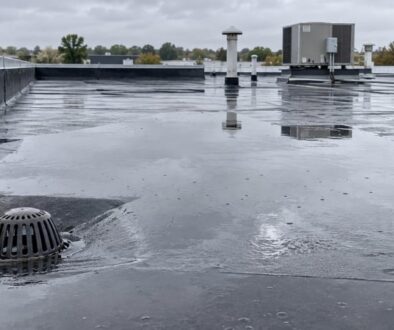
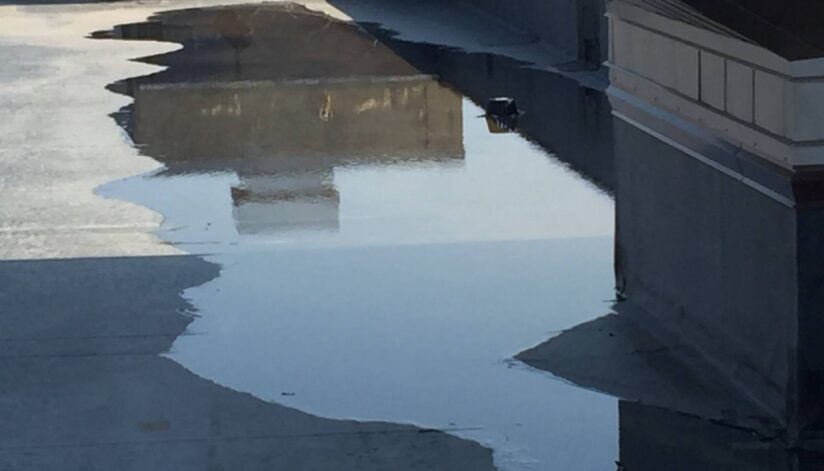
Flat roofs are not completely flat. They are built with a slight slope, called a pitch, to move water toward drains or scuppers. When drainage on flat commercial roofs fails, water pools on the surface. This extra weight increases the risk of leaks and speeds up the breakdown of roofing materials.
Problems Caused by Poor Drainage
Clogged drains or poor slope design lead to several issues:
● Leaks and water intrusion – Standing water seeps into seams, penetrations, and flashing, causing leaks inside the building.
● Structural stress – One inch of standing water adds about 5 pounds per square foot of weight, straining the roof deck and support system.
● Membrane damage – Materials like TPO, PVC, or EPDM deteriorate faster when exposed to ponding water.
● Freeze-thaw cycles – In Wisconsin winters, pooled water freezes, expands, and damages the roof surface.
● Insurance concerns – Claims may be denied if damage results from poor maintenance, leaving owners responsible for repairs.
These risks show why drainage on flat commercial roofs is critical for both safety and financial protection.
Common Drainage Systems
Flat commercial roofs usually rely on one of three systems:
● Interior drains – Located in the center of the roof and connected to interior piping.
● Scuppers – Openings in parapet walls that allow water to exit the roof surface.
● Gutters – Installed along roof edges to collect and redirect water.
Each system works only if it is designed correctly and maintained regularly.
How To Improve Drainage
Business owners can take simple steps to improve drainage on flat commercial roofs:
● Schedule routine inspections, especially after storms.
● Keep drains, scuppers, and gutters free of leaves and debris.
● Ensure the slope directs water toward drainage points.
● Repair low spots or depressions where water collects.
● Replace undersized or damaged drainage components.
Professional inspections are the best way to identify and fix issues before they grow into expensive repairs.
The Role Of Preventive Maintenance
At Ledegar Roofing, we recommend inspecting flat commercial roofs at least twice a year, in spring and fall. These inspections confirm drainage systems are clear before heavy rain or snow and also check for signs of membrane wear or seam separation. Preventive maintenance keeps water moving off the roof and extends the lifespan of the entire system.
Protect Your Investment
Proper drainage on flat commercial roofs is essential. It prevents leaks, protects structures, and supports the long-term health of your building. If you see ponding water, clogged drains, or recurring leaks, it is time to schedule an inspection.
Ledegar Roofing serves La Crosse, Onalaska, Sparta, and surrounding areas with commercial roofing installation, repair, and maintenance. Call 608-785-0901 today or schedule your free inspection online and keep your roof performing at its best.