
Managing Snow Accumulation on Commercial Flat Roofs
Snow is part of doing business in Wisconsin. By January, commercial buildings across La Crosse and the surrounding area often carry weeks or months of accumulated snow. While flat roofs are designed to handle winter conditions, snow buildup creates real risks if it is not monitored and managed properly. At Ledegar Roofing, we work with commercial property owners every winter to address snow accumulation issues before they lead to leaks, structural damage, or emergency repairs.
Understanding how snow affects flat commercial roofs helps building owners protect their investment, keep occupants safe, and avoid unexpected downtime.
Why Snow Accumulation Is a Concern on Flat Roofs
Flat commercial roofs do not shed snow the same way sloped roofs do. Snow tends to stay in place, especially when temperatures remain cold for extended periods. Over time, layers of snow compress and become heavier, particularly when mixed with ice or melting snow. Wet snow weighs significantly more than dry snow. As snow melts during warmer periods and refreezes overnight, the added weight places stress on the roof structure. This is one of the most common winter concerns we see on commercial flat roofs.How Much Weight Snow Adds
Snow load adds up faster than many building owners realize. One cubic foot of wet snow can weigh more than 20 pounds. When snow accumulates across thousands of square feet, the total load becomes substantial. Excess weight can lead to:- Structural stress on the roof deck and supports
- Sagging or deflection in roof surfaces
- Cracking or movement in roofing materials
- Increased risk of collapse in extreme cases
Drainage Issues Made Worse by Snow
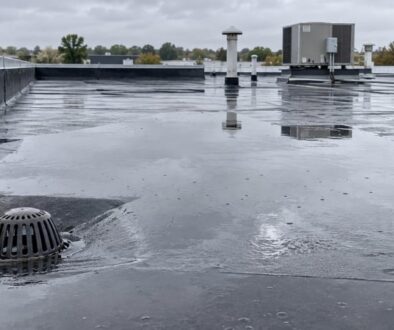
Drainage plays a critical role in how flat roofs handle snow accumulation. Snow often melts during the day when sunlight or warmer air hits the roof surface. That meltwater needs a clear path to drains or scuppers. When drains freeze or become blocked by ice and debris, water has nowhere to go. It pools on the roof surface and refreezes overnight. This cycle repeats and leads to thicker ice buildup and heavier loads in specific areas. Poor drainage combined with snow accumulation increases the risk of leaks, especially around seams, flashing, and penetrations.Where Snow Causes the Most Problems
Snow rarely distributes evenly across a flat roof. Certain areas tend to collect more weight and moisture than others. These areas include:- Low spots where water naturally pools
- Areas near drains and scuppers
- Around rooftop equipment such as HVAC units
- Along parapet walls where drifting occurs
Snow Removal Risks and Best Practices
Snow removal on commercial flat roofs must be handled carefully. Improper removal often causes more damage than leaving snow in place. Common mistakes include using metal shovels, scraping too close to the membrane, or piling snow in one area. These actions damage roofing materials and create uneven loads. Professional snow management focuses on reducing excess weight while protecting the roof system. Trained crews know how to clear paths to drains, reduce buildup in high risk areas, and avoid membrane damage.Ice Dams and Interior Leaks
Snow accumulation contributes to ice dam formation on flat roofs, especially along edges and transitions. When heat escapes from the building, it melts snow from below. The water refreezes at colder roof edges, creating ice buildup that traps more meltwater behind it. This trapped water works its way into seams, flashing, and insulation. Interior leaks often appear far from the actual source, making the issue difficult to trace without a professional inspection.Structural and Long Term Concerns
Repeated snow loading stresses roof components over time. Insulation compresses, fasteners loosen, and deck materials weaken. These issues may not cause immediate leaks but shorten the overall lifespan of the roof system. Ignoring snow accumulation year after year increases long term maintenance costs and raises the likelihood of major repairs or early replacement.Insurance and Liability Considerations
Insurance providers often review winter damage claims closely. If damage results from lack of maintenance or unmanaged snow accumulation, coverage may be limited or denied. Routine inspections and documented snow management practices show responsible building ownership. This documentation supports claims and reduces liability concerns if damage occurs.Why Winter Inspections Matter
Mid winter roof inspections allow professionals to assess snow load, drainage performance, and early signs of stress. At Ledegar Roofing, commercial winter inspections focus on:- Snow and ice buildup patterns
- Drain and scupper conditions
- Signs of ponding water beneath snow
- Membrane seams and flashing integrity
- Interior indicators of moisture intrusion
Proactive Steps Building Owners Can Take
Building owners and property managers can reduce risk by staying proactive during winter:- Monitor snow depth after major storms
- Keep drains and scuppers accessible
- Schedule professional inspections during prolonged cold periods
- Avoid untrained snow removal
- Address minor concerns before they escalate