
How Winter Freeze-Thaw Cycles Affect Commercial Roof Systems
Winter in Wisconsin puts steady pressure on commercial buildings. In January, daytime temperatures often rise above freezing, then fall sharply overnight. This constant shift creates freeze-thaw cycles that quietly wear down roofing systems. At Ledegar Roofing, we see the effects of freeze-thaw damage every winter across La Crosse and the surrounding region. Understanding how these cycles affect commercial roof systems helps building owners prevent leaks, structural issues, and costly emergency repairs.
What Are Freeze-Thaw Cycles?
Freeze-thaw cycles occur when moisture enters a roofing system, freezes as temperatures drop, then thaws again when temperatures rise. Water expands when frozen. Each cycle applies pressure to roofing materials. Over time, repeated expansion and contraction weaken membranes, seams, flashing, and fasteners.
Commercial roofs face higher exposure because of their size, flat or low-slope design, and constant contact with snow and ice. Once moisture enters the system, winter conditions accelerate damage.
Why Commercial Roofs Face Higher Risk
Most commercial buildings use flat or low-slope roofing systems such as TPO, EPDM, PVC, or built-up roofing. These systems rely on tight seams, proper drainage, and secure flashing to remain watertight. Freeze-thaw cycles stress each of these components.
- Several factors increase vulnerability, including:
- Ponding water from snowmelt
- Frozen or clogged drains
- Multiple roof penetrations for HVAC and utilities
- Older membranes with reduced flexibility
- Heavy rooftop equipment adding constant load
When moisture sits on a roof surface or seeps into seams, freeze-thaw cycles speed up deterioration.
How Roof Membranes Are Affected
Roof membranes are designed to flex, but winter conditions push materials to their limits. As temperatures drop, membranes stiffen. When trapped moisture freezes beneath the surface, it pushes upward against seams and fasteners. During the next thaw, the material relaxes slightly. This repeated movement weakens the roof system over time.
Common membrane problems include seam separation, small cracks that spread, and loss of adhesion around edges and penetrations. Once the membrane is compromised, water intrusion becomes more likely with each thaw.
Flashing and Penetrations Take the Biggest Hit
Flashing protects the most vulnerable areas of a commercial roof. Freeze-thaw cycles often cause flashing to pull away, crack, or lose its seal due to repeated movement and temperature stress.
Areas most often affected include:
- HVAC curbs
- Vent pipes
- Roof to wall transitions
- Skylights
- Chimney bases on mixed use buildings
When flashing fails, leaks may appear far from the actual entry point, which makes diagnosis more difficult and repairs more expensive.
Drainage Plays a Critical Role
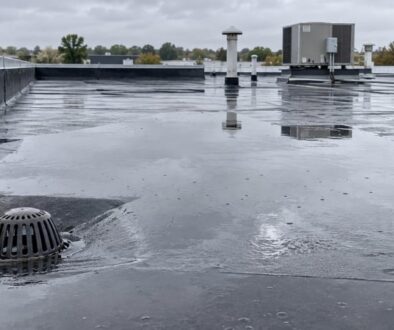
Drainage problems significantly increase freeze-thaw damage. Snow melts during warmer periods, then refreezes overnight. If drains or scuppers are blocked by ice or debris, water remains trapped on the roof surface.
Standing water causes multiple issues at once. It adds weight, allows moisture to seep into seams, and freezes repeatedly in the same locations. Over time, this cycle accelerates membrane breakdown and increases the risk of interior leaks.
Structural Stress Builds Over Time
One inch of standing water weighs more than five pounds per square foot. When snow and ice are added, the load on a commercial roof increases quickly. Repeated freeze-thaw cycles combined with excess weight strain the roof deck and supporting structure.
Over time, this stress leads to problems such as deck deflection, insulation compression, loosening fasteners, and cracking in structural components. These issues often develop gradually and remain hidden until major damage occurs.
Insurance and Maintenance Considerations
Many property owners assume winter damage will be covered by insurance. In reality, insurers often examine whether damage resulted from deferred maintenance. If freeze-thaw damage is linked to clogged drains, neglected repairs, or a lack of inspections, claims may be denied.
Routine winter inspections help document roof conditions and demonstrate responsible maintenance practices. This documentation supports future claims and reduces liability concerns.
Why January Inspections Matter
Mid-winter inspections allow roofing professionals to identify early signs of freeze-thaw damage before small issues turn into major failures. At Ledegar Roofing, commercial inspections focus on drainage performance, membrane seams, flashing integrity, and signs of interior moisture.
Addressing problems during winter reduces emergency repair costs and limits disruption to daily business operations.
Protect Your Commercial Roof This Winter
Freeze-thaw cycles are unavoidable in Wisconsin. Roof failure is not. With proactive maintenance and professional inspections, commercial roof systems remain durable and reliable throughout winter.
Ledegar Roofing serves La Crosse, Onalaska, Winona, and surrounding areas with professional commercial roofing inspections and maintenance. Visit ledegarroofing.com/contact or call our team at (608) 785-0901 today to schedule a FREE consultation.